For decades, gaming has been dismissed as a hobby, a distraction, or a niche interest. But behind the flashing screens and high‑frame‑rate battles, something far more significant was happening. Gamers were driving the development of increasingly powerful hardware, constantly demanding more power, more speed, and more realism. In doing so, they unintentionally laid the technological groundwork for the artificial intelligence revolution.
Today’s AI breakthroughs — from large language models to real‑time image generation — owe a surprising debt to the gaming community.
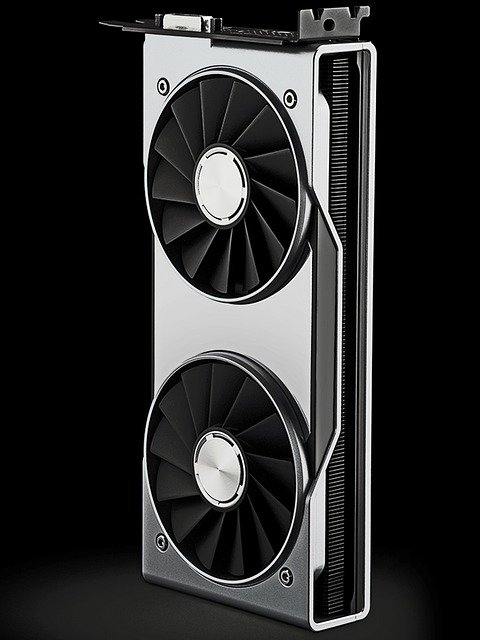
The GPU: Born for Gaming
The modern graphics processing unit (GPU) was originally designed for one main purpose: to render increasingly complex video game graphics. As games evolved from simple 2D sprites to photorealistic 3D worlds, the demand for raw graphical horsepower exploded.
Gamers wanted:
- higher resolutions
- smoother frame rates
- more detailed textures
- realistic lighting and physics
To meet these demands, companies poured billions into GPU research and development over decades. Over time, those investments produced hardware that turned out to be perfectly suited for far more than gaming.
Why GPUs Are Perfect for AI Workloads
Without going into too much detail, AI models require enormous amounts of matrix multiplication to be done in parallel — and while the math is different, gaming also depends on performing huge numbers of calculations at the same time. GPUs were built to handle the large number of simultaneous calculations required in gaming and as a result are well suited to handling the calculations associated with AI. GPUs also have high memory bandwidth and modern GPUs also have tensor cores. CPUs, built for general tasks, simply cannot perform the same number of calculations simultaneously and are not as suitable for AI as a GPU.
The same hardware that lets a gamer enjoy smooth 4K graphics is what allows an AI model to:
- learn patterns in billions of data points
- generate images in seconds
- understand natural language
- simulate complex environments
GPUs are now essential for AI, but – as discussed – their evolution was largely driven by gaming demands, not by AI research.
Gamers Created the Market That Made AI Possible
This is the part people often overlook:
For decades, AI research played only a minor role in funding GPU development. The commercial demand that funded rapid GPU innovation came overwhelmingly from gaming, with additional contributions from fields like Computer-Aided Design (CAD) and scientific computing.
The global gaming market — worth billions of dollars — created:
- a huge customer base
- constant demand for better hardware
- fierce competition between GPU manufacturers
- rapid innovation cycles
AI researchers later stepped in and said, “We can use that.”
If gamers had not created a profitable, competitive GPU ecosystem, the hardware needed for AI today would almost certainly have been far too expensive, too slow, or simply non-existent. That ecosystem consisted of many companies and people, but some companies contributed more than others.
NVIDIA: From Gaming Company to AI Powerhouse
NVIDIA is the clearest example of this evolution.
For most of its history, NVIDIA was known as a gaming company. Its GeForce line was built for players, not scientists. But as researchers discovered that GPUs were perfect for machine learning, NVIDIA pivoted — and today it is one of the most important companies in the AI world.
Yet its dominance is built on decades of gaming‑driven innovation.
No gamers, no GeForce.
No GeForce, no CUDA.
No CUDA, no modern AI.
Gaming benefits from AI
While gamers helped create the market that made modern AI possible, AI has since become a major driver of continued GPU innovation. The rapid growth of AI has generated additional revenue for manufacturers, enabling greater investment in research and development. As a result of this additional investment from AI, GPUs may now be advancing at a faster rate than they would have done without AI. In that sense, today’s gamers are likely benefiting from the very AI revolution that gaming helped make possible.
AI has not been entirely positive for gaming. Surging demand for AI hardware has contributed to higher GPU prices and periods of limited availability. However, although future high‑end cards may be out of reach for many gamers, it is worth noting that without AI they may not have been available at that time in the first place.
It should be said that AI is not the only industry to have affected the graphics card market; cryptocurrency mining also played a significant role in driving up demand, increasing prices, and creating shortages during its peak.
Conclusion: AI Stands on the Shoulders of Gamers
The AI revolution started in bedrooms, living rooms, and internet cafés where gamers pushed their machines to the limit. Their passion for immersive, high‑performance experiences forced GPU technology to evolve at a pace no other industry could have driven.
It’s ironic: the same people who were once told gaming was a waste of time and energy ended up shaping the future of computing and the world. They never set out to build the foundation of artificial intelligence — but they did.
AI is now poised to transform the world in ways we are only beginning to understand. And gamers, who so often play heroes on‑screen, have helped create the technology that is now shaping the real world beyond the screen.
Leave a Reply