Category: AI

  • How Gamers Built the Foundation for Modern AI

    For decades, gaming has been dismissed as a hobby, a distraction, or a niche interest. But behind the flashing screens and high‑frame‑rate battles, something far more significant was happening. Gamers were driving the development of increasingly powerful hardware, constantly demanding more power, more speed, and more realism. In doing so, they unintentionally laid the technological groundwork for the artificial intelligence revolution.

    Today’s AI breakthroughs — from large language models to real‑time image generation — owe a surprising debt to the gaming community.

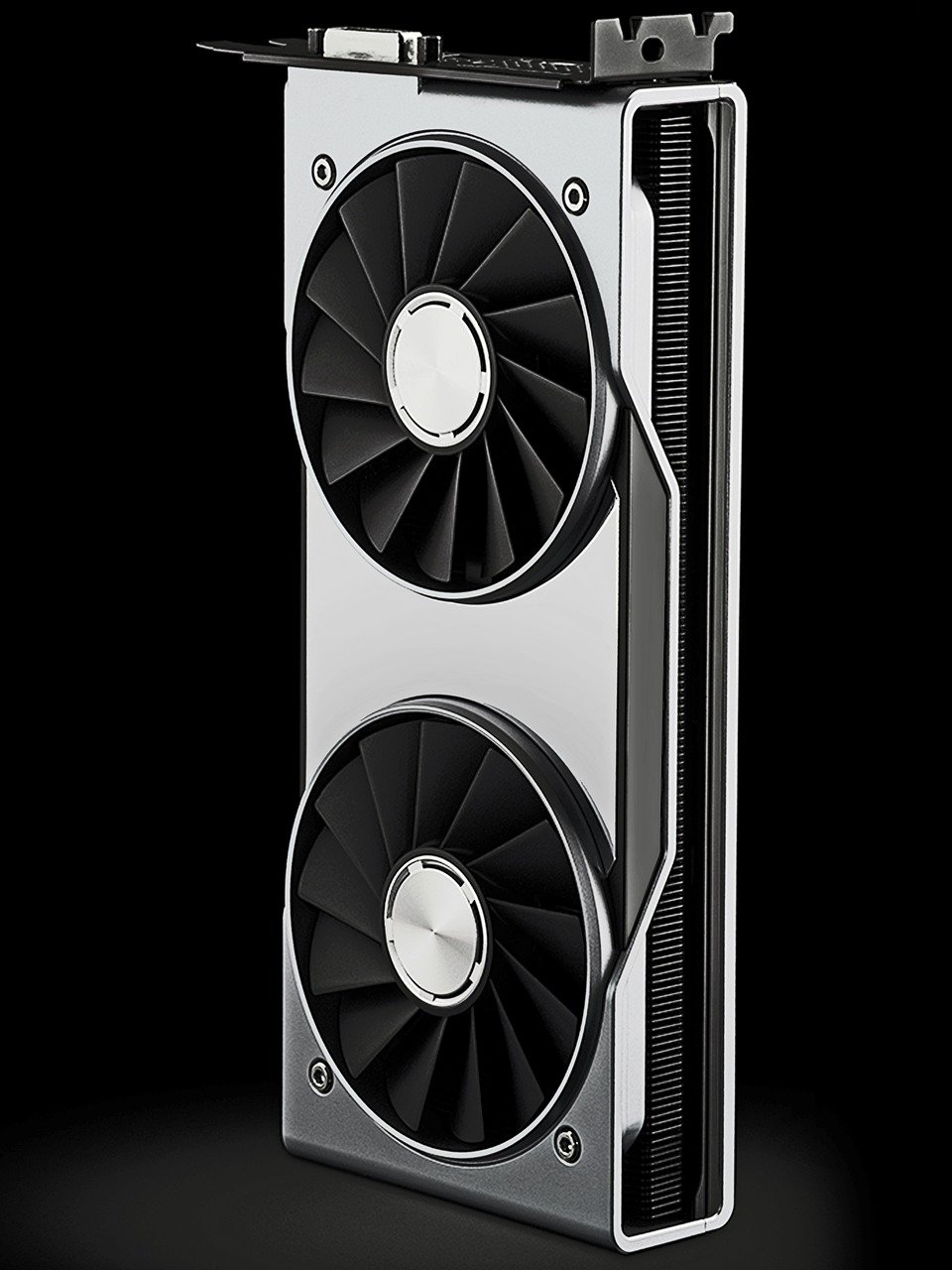
    Graphics Card used for gaming or AI
    A modern graphics card


    The GPU: Born for Gaming

    The modern graphics processing unit (GPU) was originally designed for one main purpose: to render increasingly complex video game graphics. As games evolved from simple 2D sprites to photorealistic 3D worlds, the demand for raw graphical horsepower exploded.

    Gamers wanted:

    • higher resolutions
    • smoother frame rates
    • more detailed textures
    • realistic lighting and physics

    To meet these demands, companies poured billions into GPU research and development over decades.  Over time, those investments produced hardware that turned out to be perfectly suited for far more than gaming.

    Why GPUs Are Perfect for AI Workloads

    Without going into too much detail, AI models require enormous amounts of matrix multiplication to be done in parallel — and while the math is different, gaming also depends on performing huge numbers of calculations at the same time. GPUs were built to handle the large number of simultaneous calculations required in gaming and as a result are well suited to handling the calculations associated with AI.  GPUs also have high memory bandwidth and modern GPUs also have tensor cores. CPUs, built for general tasks, simply cannot perform the same number of calculations simultaneously and are not as suitable for AI as a GPU.

    The same hardware that lets a gamer enjoy smooth 4K graphics is what allows an AI model to:

    • learn patterns in billions of data points
    • generate images in seconds
    • understand natural language
    • simulate complex environments

    GPUs are now essential for AI, but – as discussed – their evolution was largely driven by gaming demands, not by AI research.

    Gamers Created the Market That Made AI Possible

    This is the part people often overlook:

    For decades, AI research played only a minor role in funding GPU development.  The commercial demand that funded rapid GPU innovation came overwhelmingly from gaming, with additional contributions from fields like Computer-Aided Design (CAD) and scientific computing.

    The global gaming market — worth billions of dollars — created:

    • a huge customer base
    • constant demand for better hardware
    • fierce competition between GPU manufacturers
    • rapid innovation cycles

    AI researchers later stepped in and said, “We can use that.”

    If gamers had not created a profitable, competitive GPU ecosystem, the hardware needed for AI today would almost certainly have been far too expensive, too slow, or simply non-existent.  That ecosystem consisted of many companies and people, but some companies contributed more than others.

    NVIDIA: From Gaming Company to AI Powerhouse

    NVIDIA is the clearest example of this evolution.

    For most of its history, NVIDIA was known as a gaming company. Its GeForce line was built for players, not scientists. But as researchers discovered that GPUs were perfect for machine learning, NVIDIA pivoted — and today it is one of the most important companies in the AI world.

    Yet its dominance is built on decades of gaming‑driven innovation.

    No gamers, no GeForce.
    No GeForce, no CUDA.
    No CUDA, no modern AI.

    Gaming benefits from AI

    While gamers helped create the market that made modern AI possible, AI has since become a major driver of continued GPU innovation.  The rapid growth of AI has generated additional revenue for manufacturers, enabling greater investment in research and development.  As a result of this additional investment from AI, GPUs may now be advancing at a faster rate than they would have done without AI.  In that sense, today’s gamers are likely benefiting from the very AI revolution that gaming helped make possible. 

    AI has not been entirely positive for gaming. Surging demand for AI hardware has contributed to higher GPU prices and periods of limited availability.  However, although future high‑end cards may be out of reach for many gamers, it is worth noting that without AI they may not have been available at that time in the first place.

    It should be said that AI is not the only industry to have affected the graphics card market; cryptocurrency mining also played a significant role in driving up demand, increasing prices, and creating shortages during its peak.

    Conclusion: AI Stands on the Shoulders of Gamers

    The AI revolution started in bedrooms, living rooms, and internet cafés where gamers pushed their machines to the limit. Their passion for immersive, high‑performance experiences forced GPU technology to evolve at a pace no other industry could have driven.

    It’s ironic: the same people who were once told gaming was a waste of time and energy ended up shaping the future of computing and the world. They never set out to build the foundation of artificial intelligence — but they did.

    AI is now poised to transform the world in ways we are only beginning to understand. And gamers, who so often play heroes on‑screen, have helped create the technology that is now shaping the real world beyond the screen.


    We would love to hear what our readers think about this and our other blog posts.  If you have any comments, please feel free to contact us via our contact form.

  • Writing Articles with AI: Lessons from Our Experience

    In this blog post, we discuss our experience of using AI to write articles—what we expected the process to be like, and how the reality differed.

    One of the great strengths of AI is content generation. It is capable of writing stories and generating images at remarkable speed. Much has been said about how AI can write blog posts for you and increase your output severalfold. On the surface, it appears to be the perfect way to boost productivity and work smarter. So before writing articles with AI we were expecting that AI would nearly write entire articles on its own and increase output to incredible levels. While this is true to some extent, the reality comes with quite a few caveats.

    After using AI to write articles for the past year we thought we would share some of the things we have learned:

    The Positives of Using AI to Help Write Articles

    Adding Value and Enhancing Content Quality

    Firstly, AI adds significant value because it can provide information and ideas for your article that you may not have originally planned to include. This is extremely valuable, as it has the potential to improve the overall quality and depth of the content, which should be a top priority for any article writer or content producer. We found that the information provided by AI complements the material added by our writers, helping to create more well-rounded and informative articles.

    Enhancing Language Quality

    AI can help rewrite an article to improve grammar, spelling, and overall readability. You can ask it to take both AI-generated and manually written content and turn it into a more coherent and polished piece of writing.

    Increasing Output

    Another impact of AI for us is a higher rate of article production. We are likely producing more articles per week by using AI to assist with writing than we would if we were writing them entirely by hand. In addition, because the articles contain extra information, they are also somewhat longer than they would have been otherwise.

    As a result, AI not only improves productivity but also enables a more efficient workflow, allowing writers to focus more on refining ideas, editing, and ensuring overall quality rather than spending most of their time on initial drafting.

    Better Search Engine Optimisation

    We also found that AI can help with generating keywords and meta descriptions, especially in situations where it can be difficult to come up with ideas or when you feel blocked creatively.  In addition, it can quickly suggest multiple variations, helping you choose the most effective options for SEO and improving the visibility and performance of your articles in search results.

    Article Review

    After writing an article, you can simply ask AI to review the entire piece, and it can sometimes make valuable suggestions that you may choose to incorporate into your work. This can be a useful approach for many writers, particularly for those who prefer to keep their use of AI to a minimum when producing articles.


    The Limitations of Using AI When Writing Articles

    Letting AI Write the Article May Not Be the Best Approach

    In our experience, simply writing a prompt and allowing AI to generate an article is often not the best approach. We have found that articles frequently require checking and editing to bring them up to standard. Sometimes, individual sentences may not fully make sense, even though most of the article produced by the AI is coherent. What we often see is repetition, with the same ideas being expressed in slightly different words. You therefore have to be careful that AI does not detract from the overall quality of your content.

    Rewritten Text Requires Human Review

    Another issue is that when you use AI to rewrite an article, you need to be confident that the meaning of your original text has not been altered in any way, and that the revised version is not unintentionally saying something slightly or completely different. This process can be time-consuming and sometimes frustrating.  One approach is to rewrite the articles paragraph by paragraph to reduce the risk of confusion and maintain accuracy.  Starting with the first paragraph, ask an LLM to rewrite it.  You then review the new paragraph and check it against the original paragraph.  Over time, you may find that the LLM often produces reliable rewrites, reducing the need for extensive checking.  This process is then repeated for every paragraph. 

    Potential for Search Engine Ranking Issues

    One concern we have is that using AI might impact our search engine rankings. However, going forward, this may become less of an issue as more people begin using AI to create and optimise articles, and search engines continue to adapt to AI-assisted content.


    Summary

    In summary, in our view, AI works best for article writing when used collaboratively with humans rather than independently. It can significantly improve productivity and enhance content quality, although there are also limitations to consider. Ultimately, the degree of AI involvement will vary depending on individual preference and working style.